The secret to great pick and drop braids is knowing when to stop braiding. Instead of carrying each braid to the ends, the stylist secures a short braided section and lets the remaining hair flow loose. That creates the signature mix of neat roots and soft movement. The technique works beautifully with straight, wavy, and curly textures, while color and styling can completely change the mood. These 16 sassy pick and drop braid hairstyles explore playful parts, bold shades, ponytails, curls, and polished updos without losing the effortless character of the original style.
Classic Pick and Drop Braids
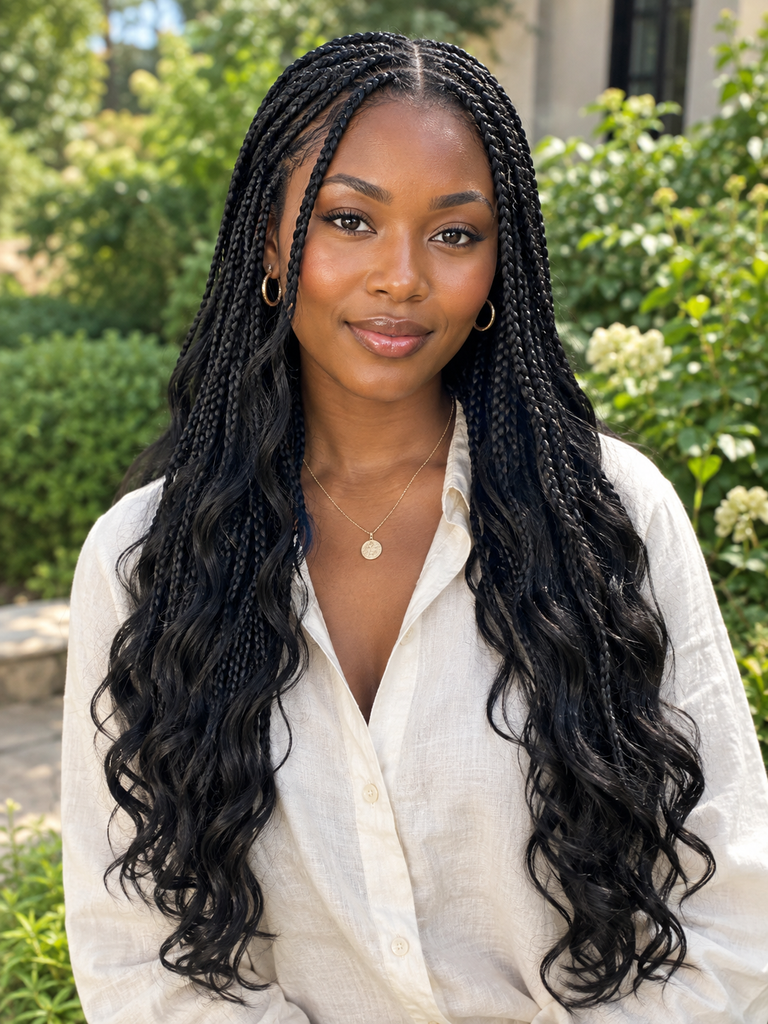
Keep the foundation neat and let the loose length provide all the movement. Classic pick and drop braids usually feature small individual braids near the scalp before transitioning into straight or softly wavy hair. A center part gives the style a balanced finish, while a longer length creates dramatic flow. Choose a natural black or deep-brown shade for an understated look, then use lightweight hair oil on the loose sections to maintain shine.
Curly Pick and Drop Braids
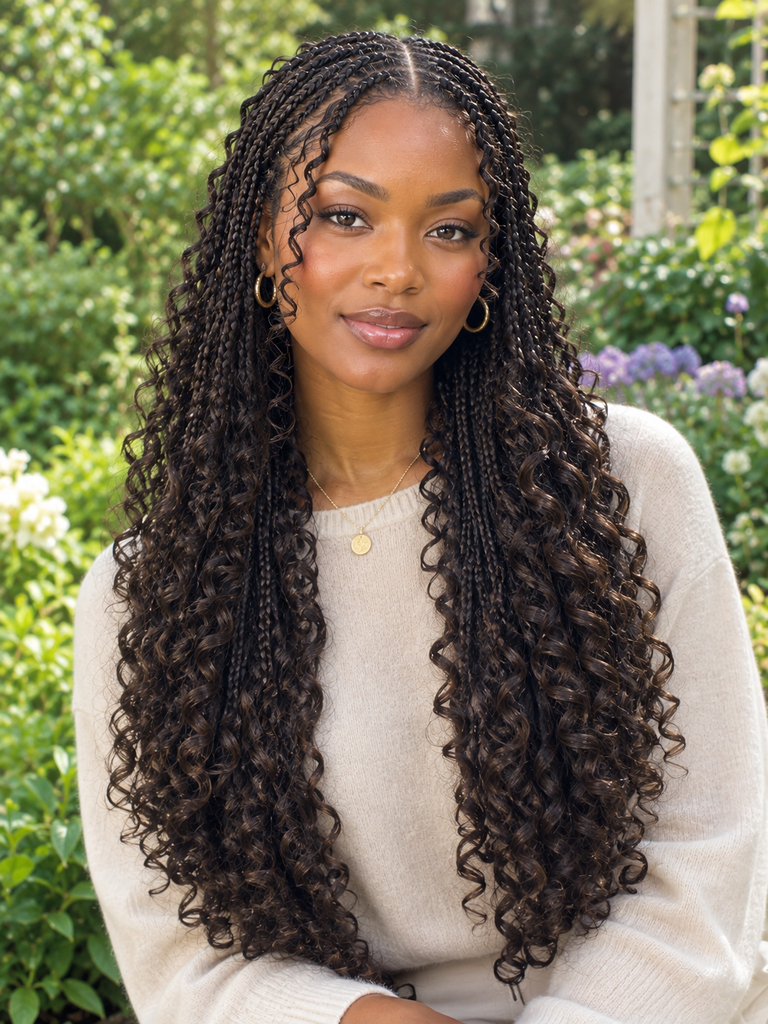
Curly ends instantly give pick and drop braids a sassier personality. Keep the braided sections short and neat, then let bouncy curls take over through the remaining length. Water wave, loose deep wave, or curly textures can create different levels of volume. For a more defined finish, refresh the loose hair with curl foam. Keep the roots relatively smooth so the contrast between structured braids and lively curls stays clear.
Short Pick and Drop Braids
Short pick and drop braids prove that you do not need waist-length hair for impact. Keep the loose section around shoulder length, allowing the ends to softly frame the face. Body wave or water wave textures add movement without overwhelming the shorter silhouette. A clean middle part keeps the style polished, while slightly tousled ends make it feel more relaxed. This length also creates a lighter, easier-to-manage alternative to very long installations.
Knotless Pick and Drop Braids
For a flatter-looking foundation, ask your braider about a knotless pick and drop technique. Extensions are incorporated gradually into the natural hair instead of creating a traditional bulky knot. The result can give the roots a smoother appearance before the loose hair begins. Keep the dropped section wavy or straight, depending on your preference. This variation works especially well when you want the braid bases to stay subtle beneath flowing lengths.
Side-Part Pick and Drop Braids
A deep side part changes the entire silhouette without changing the basic technique. Create smaller braids along the fuller side, then let the loose lengths sweep across the face. Body wave or loose wave extensions complement the asymmetrical shape particularly well. Leave a few shorter pieces near the front for softness. If you want extra drama, choose a longer installation and keep the side part sharply defined for a bold, glamorous finish.
Half-Up Half-Down Pick and Drop Braids
Gather the upper portion into a relaxed half-up style while leaving the rest of the loose lengths flowing freely. This simple adjustment gives pick and drop braids a playful, lifted shape. Water waves or soft curls add movement to the lower section, while a compact ponytail keeps the top controlled. Wrap a small loose strand around the elastic for a cleaner finish. Keep the gathered section relaxed instead of pulling it overly tight.
High Ponytail Pick and Drop Braids
Pulling pick and drop braids into a high ponytail gives the style instant energy. Keep the braided roots sleek, then gather the loose lengths toward the crown. Straight or body wave textures create a polished ponytail, while curls make the silhouette fuller and more playful. Wrap one section of hair around the base to conceal the elastic. Longer lengths work especially well because they create a dramatic cascade when gathered high.
Low Ponytail Pick and Drop Braids
For something more understated, gather the loose lengths into a low ponytail near the nape. The short braided sections remain visible around the roots, while the ponytail creates a smooth transition into flowing hair. Straight, kinky-straight, or body wave textures suit this version nicely. A center part gives it a refined finish, while a side part adds more personality. Keep the ponytail moderately loose so the style retains natural movement.
Auburn Pick and Drop Braids
A warm auburn shade gives this nostalgic style a noticeable color refresh. Blend the braided roots with rich brown-red extensions, then choose loose waves that allow the color variation to catch the light. A middle part keeps the shade evenly distributed around the face. Because red-based shades can fade faster than darker colors, regular color-safe cleansing and moisturizing products can help preserve the tone. Keep the overall texture soft for an effortless finish.
Copper Pick and Drop Braids
Copper brings more brightness and personality to pick and drop braids. Use a warm copper shade throughout the loose lengths, or keep the roots darker for a dimensional transition. Straight extensions create a sleek, statement-making effect, while soft waves make the color appear more blended. Since vibrant copper shades generally require more upkeep, discuss the desired tone with your stylist beforehand. A shoulder-to-mid-back length keeps the bold color easy to showcase.
Blonde Pick and Drop Braids
Blonde extensions make the loose sections stand out against neatly braided roots. Try honey blonde for warmth, or choose a brighter blonde when you want stronger contrast. Keep the braided foundation close to your natural root shade for a more seamless transition. Loose body waves work especially well because they catch light across the lengths. If the hair requires significant lightening, expect more maintenance to preserve the brightness and condition of the color.
Ombre Pick and Drop Braids
Ombre color creates a gradual transition from darker roots into lighter loose lengths. The technique works particularly well with pick and drop braids because the braided foundation naturally anchors the darker section. Try dark brown into caramel, auburn into copper, or black into warm brown. Keep the texture softly wavy so the color transition remains visible. The result feels playful without requiring an all-over bright shade from roots to ends.
Pick and Drop Braids With Curled Ends
For a subtle twist, keep most of the loose length relatively smooth and curl only the ends. This creates a defined finish without turning the entire hairstyle into a full curly look. Medium or long installations give the curled section enough length to bounce naturally. Use flexible curls rather than extremely tight spirals for a softer effect. A clean center part keeps the style balanced while allowing the curled ends to provide movement.
Pick and Drop Braids With Face-Framing Pieces
Leave a few loose pieces around the front to soften the transition between the braided roots and flowing lengths. The face-framing sections can reach the cheekbones, jawline, or collarbone depending on your desired shape. Keep the rest of the hair wavy or lightly curled for contrast. This version works beautifully with a center or side part. Use lightweight styling foam on the front pieces so they stay defined without becoming stiff.
Pick and Drop Braids With Accessories
Small accessories can make a familiar braid pattern feel much more personalized. Add a few gold cuffs, subtle beads, or decorative clips to selected braided sections rather than covering every part. Keep the loose lengths relatively simple so the accessories remain visible. Water waves or soft curls create a playful contrast with metallic details. Choose accessories that sit securely without adding unnecessary weight to the individual braided sections.
Messy Pick and Drop Bun
Turn your pick and drop braids into a relaxed updo by gathering the loose lengths into a messy bun. Twist the hair loosely at the crown or slightly lower, then secure it with pins while allowing a few textured pieces to escape. Wavy or curly extensions create the most effortless finish. Keep the braided roots neat for contrast. A few loose front pieces can make the bun feel intentionally undone rather than overly formal.